Your Personalized Profile

Your Pattern:
The Sleep Thief

Your Symptom Profile
94% Sleep Disruption 90% Cortisol Clearing 88% Night Waking 92% Recovery Cycle 86% Daytime Irritability 87% Hormonal Imbalance

Your symptom profile shows elevated sleep disruption, cortisol clearing deficit, and recovery cycle breakdown as your primary drivers. This pattern indicates your brain's nightly reset process has been significantly disrupted by hormonal changes.

View Your Quiz Completion Offer

Based on your responses, you're experiencing what we call the Sleep Thief pattern. 


- If you're lying awake at 3am with your mind racing

- if you're waking up drenched in sweat multiple times a night

- if you're more exhausted after eight hours in bed than you were before you went to sleep


You're not just dealing with "bad sleep." 


You're caught in a vicious biological cycle where disrupted sleep is preventing your brain from doing the nightly maintenance it needs to regulate your mood and stress.


Here's what makes your pattern different: 


the sleep disruption isn't just making you tired. 


It's actively preventing your brain from clearing stress hormones, resetting neurotransmitters, and processing the emotional experiences of your day. 


Every night of poor sleep makes the next day harder to get through. 


Every difficult day makes the next night's sleep worse. 


You're trapped in a downward spiral where each component makes the other worse.


This isn't about sleep hygiene or having better bedtime routines. It's not about being stressed and "just needing to relax." 


What's happening has a very specific hormonal mechanism that's actively working against your sleep on multiple fronts simultaneously, and once you understand it, the exhaustion-irritability cycle starts making sense as something solvable rather than permanent.

Why This Is Happening To You

Your body used to have a sophisticated sleep-regulation system. 


Estrogen and progesterone worked together to: 


- control your temperature (keeping you cool enough to sleep deeply)

- regulate your sleep-wake cycle

- ensure you moved through all the critical sleep stages your brain needs for recovery


This system let you fall asleep easily, stay asleep through the night, and wake up actually rested.


But here's what most doctors don't explain about perimenopause and sleep: 


it's not just one thing going wrong. 


When estrogen and progesterone decline, they disrupt your sleep through three different mechanisms simultaneously. 


Estrogen decline causes temperature regulation problems (the night sweats that wake you up).


Progesterone decline reduces GABA activity (the neurotransmitter that helps you fall asleep and stay asleep). 


And the cortisol dysregulation from estrogen loss means your stress hormones don't drop at night like they should.

Your body is fighting against your sleep on three different fronts. 


- Even if you manage to fall asleep, the night sweats wake you up. 


- Even if you don't have hot flashes, low GABA makes your sleep light and restless. 


- Even if you're exhausted, elevated nighttime cortisol keeps your brain alert and vigilant instead of relaxed and restorative.

Here's the part that creates the vicious cycle: 


Quality sleep is when your brain does critical maintenance work. 


During deep sleep, your brain clears metabolic waste including excess cortisol and inflammatory compounds that accumulated during the day. 


During REM sleep, your serotonin and dopamine receptors reset their sensitivity. 


Without adequate time in these sleep stages, yesterday's stress hormones are still in your system when today's stress hits. 


The emotional reactivity from low serotonin doesn't get reset. 


You're starting each day already depleted before anything even happens.

View Your Quiz Completion Offer

Why Your Usual Strategies Stopped Working

You've probably tried everything the sleep experts recommend. 


Dark room, cool temperature, no screens before bed, consistent bedtime, magnesium supplements, sleep meditations. 


Maybe you've tried melatonin or prescription sleep aids. 


And here's the thing: none of that is bad advice. 


But when your sleep is disrupted by hormonal temperature dysregulation, GABA deficiency, and cortisol elevation, behavioral strategies are trying to fix a problem that's biochemical.


- It's not that you're bad at sleep hygiene. 


- It's that sleep hygiene can't fix hormonal hot flashes that wake you up. 


- Meditation can't compensate for inadequate GABA. 


- A dark room doesn't address elevated nighttime cortisol. 


The foundation is broken, and no amount of optimization can work around that.

This is why you might notice that even when you do everything "right," you still sleep poorly. 


You followed all the rules, went to bed on time, and still woke up at 2am for two hours. 


Or you finally slept through the night but woke up feeling like you didn't sleep at all because you never reached deep restorative sleep stages. 


Your sleep architecture is fundamentally disrupted by hormonal changes, and behavioral modifications can't rebuild that.

Women in your pattern often describe feeling hopeless about ever sleeping well again. Like they've tried everything and nothing works, so this must just be how life is now. 


But you're not resistant to sleep solutions.


The solutions you've been trying weren't designed to address hormonal sleep disruption, which is a completely different problem than stress-based insomnia.

What Your Pattern Actually Needs

Women who've broken the sleep-exhaustion cycle didn't get there by trying harder at sleep hygiene. 


They got there by addressing what's actually disrupting their sleep: the hormonal systems that control temperature regulation, GABA production, and nighttime cortisol clearance.

The research on sleep and hormonal transitions is actually quite clear. 


When you support the specific mechanisms that hormones normally maintain, sleep quality improves first, followed by mood stabilization. 


It's not about forcing sleep with sedatives that make you unconscious but don't allow restorative sleep stages. It's about giving your body the support it needs to regulate sleep naturally the way it used to.


There's been interesting clinical research on botanical compounds that address the multiple mechanisms affecting your sleep. 


Passionflower has been studied for its effects on GABA activity (helping with sleep onset and reducing nighttime waking). 


Ashwagandha supports cortisol regulation including the nighttime drop that should occur naturally. 


And saffron addresses the mood and stress components that make sleep disruption even worse.

Study 1: Saffron vs. Antidepressants Meta-Analysis 

Study 2: 2024 Meta-Analysis Proving Superiority
Study 3: Anxiety and Depression Double-Blind Trial
Study 4: 2025 Largest Clinical Trial to Date
Study 5: Depression Score Reduction Meta-Analysis


What women in your pattern have found helpful is addressing sleep as the foundation, not an afterthought. 


Because here's the critical piece: even the best mood supplements work against biological resistance when you're chronically sleep-deprived. 


Your brain can't maintain neurotransmitter balance when it's not getting the sleep it needs to reset those systems nightly. 


Fix the sleep first, and everything else becomes easier.


The women who've broken out of the exhaustion cycle report something specific: they're not just sleeping better. 


- Their entire day changes

- The irritability decreases

- The brain fog lifts 

- The emotional reactivity normalizes.


Because sleep was the bottleneck preventing everything else from working.

View Your Quiz Completion Offer

Where To Go From Here

Understanding your pattern is the first step. But understanding doesn't fix the hormonal mechanisms disrupting your sleep. 


At some point, you have to address what's actually broken.


VigorNatura's formula was developed specifically for women experiencing hormonal transitions affecting sleep and mood. 


It combines passionflower and ashwagandha for sleep support with saffron extract for the daytime mood and stress resilience your brain needs once sleep quality improves.

Here's what to actually expect: 


the first few nights, you might not notice dramatic changes. 


Around night 4-7 is when most women start sleeping more consistently through the night. 


This isn't a sedative that knocks you out (you might not even "feel" anything when you take it). 


You just notice you're waking up less, or when you do wake up, you fall back asleep instead of being up for two hours.


Around week 2-3 is when the daytime benefits become obvious. 


You have more patience. Your mood is more stable. The brain fog starts lifting. 


Not because the supplement is doing something different, but because your brain is finally getting the restorative sleep it needs to function properly. 


Sleep is the foundation. Once it's working, everything else builds on it.

It's a simple two-capsule daily routine. 


Take it consistently, not just on nights when you can't sleep. Your body needs steady support to rebuild these regulatory systems, not intermittent intervention.

Break the Exhaustion Cycle. Here's How.

If you're tired of waking up more exhausted than when you went to bed, if you're ready to sleep through the night again, this is your window.

🔬 LIMITED BATCH AVAILABLE 🎁
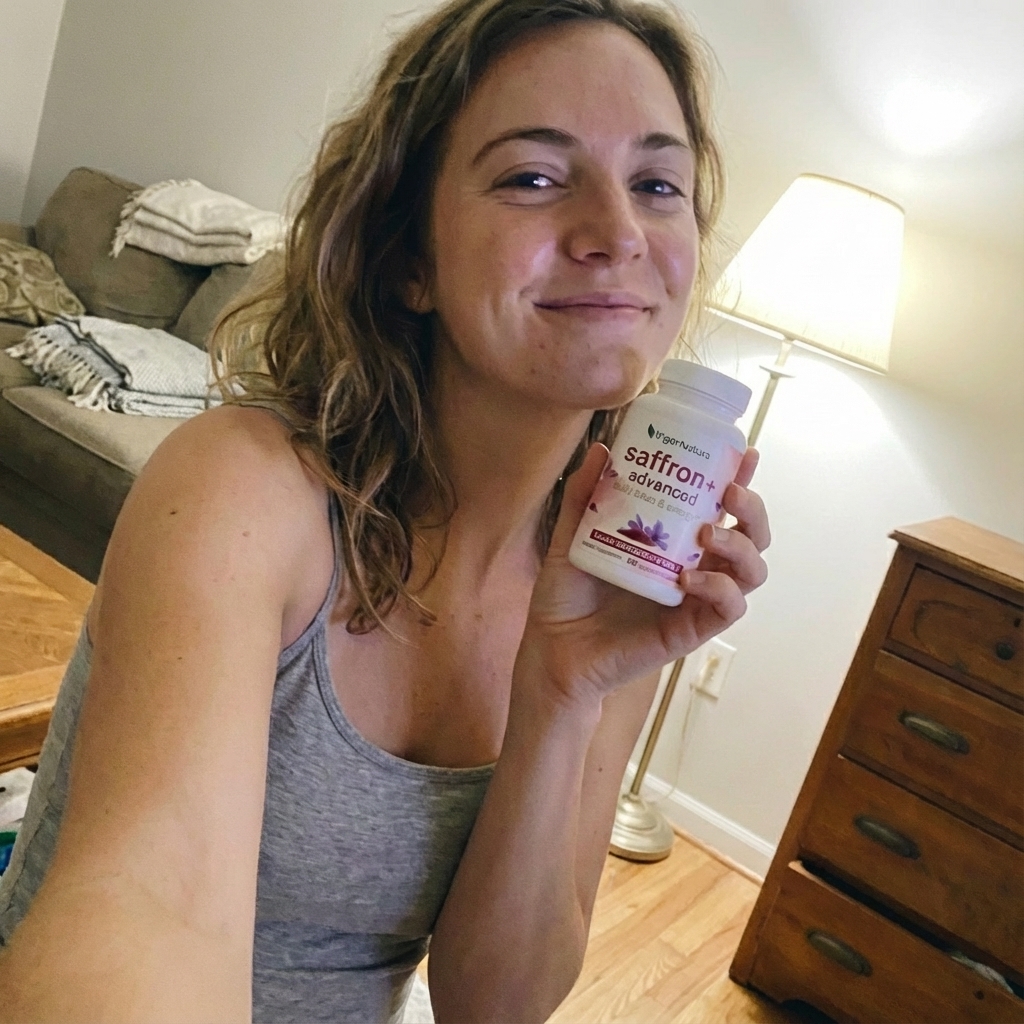
VigorNatura Saffron+ Advanced Formula

SPECIAL OFFER FOR YOUR PATTERN:

SAFFRON+ ADVANCED FORMULA
BUY 2, GET 2 BOTTLES FREE

Women who break the sleep-mood cycle give this at least 4 weeks to see full results. Better sleep typically improves within days, mood follows within weeks.

START SLEEPING THROUGH THE NIGHT

WHAT TO EXPECT: Sleep quality improves first, mood follows within 2-3 weeks

60-Day Money-Back Guarantee. Track how many nights you sleep through versus waking up multiple times. That's measurable progress you can evaluate.

There's a 60-day guarantee because this kind of change takes time to evaluate properly. 


Give it at least 2-3 weeks for sleep patterns to stabilize, then another 2-3 weeks to see the full mood and energy improvements. 


Track something measurable: how many nights per week you sleep through without waking. 


How many days you get through without the exhaustion-irritability cycle. 


That data will tell you more than trying to "feel" if it's working on day three.


You've been wondering if you'll ever sleep well again. 


You will. 


Your body just needs the right support to regulate sleep the way it used to before your hormones disrupted everything.

What Women In Your Pattern Are Saying

Frequently asked questions

How long until I see results?

Most people notice better sleep and improved stress response within the first 2 weeks.

Mental clarity and mood stability typically develop over 4-6 weeks as the botanicals reach therapeutic levels in your system. 

Full adaptogenic benefits including comprehensive stress regulation usually emerge by week 8.


Clinical studies show this progressive timeline produces lasting results rather than temporary effects.

What's the correct dosage and how should I take it?

Take 2 capsules daily with food, preferably in the morning or early afternoon. 

Consistency matters more than exact timing, so pick whatever fits your routine best.

Taking with food enhances absorption and prevents any mild stomach sensitivity. 

Don't skip days during the first 8 weeks while your body builds therapeutic levels.

Why does this include ashwagandha and other ingredients?

Saffron alone supports neurotransmitter production but doesn't regulate cortisol or reduce inflammation. 

Research shows multi-botanical formulas produce 70% stress reduction while single ingredients achieve only 20-25%. 

Each botanical works through different pathways. 

Saffron handles mood chemistry, ashwagandha regulates stress hormones, curcumin addresses inflammation, rhodiola provides mental energy and passionflower supports natural calm. 

Together they target the interconnected systems that stress and aging disrupt.

How is this better than regular saffron powder?

Regular saffron powder contains minimal active compounds and your body absorbs almost none of it. 

Our extract is standardized to 0.3% safranal, the exact concentration that matched Prozac's effectiveness in clinical trials

This requires processing 160 saffron flowers to create enough extract for one daily serving. 

Generic powder might contain 0.01% safranal or less. 

That's a 30-fold difference in the compounds responsible for mood benefits. 

Plus we include black pepper extract to boost absorption by 2000%.

Are there any side effects?

Clinical trials report minimal side effects at these dosages. 

The most common experience is no side effects at all. 

Some people notice mild digestive sensitivity if taken without food, which resolves completely by taking capsules with meals. 

The safety profile is significantly better than pharmaceutical alternatives based on published research. 

If you experience any unusual symptoms, discontinue use and consult your healthcare provider.

Is it safe to take with medications?

Most ingredients have excellent safety profiles, but St. John's Wort can interact with certain medications, particularly antidepressants, blood thinners and some other prescription drugs.


If you take any prescription medications, we strongly recommend consulting your healthcare provider before starting this or any supplement.


Your safety matters more than any sale.


A quick conversation with your doctor or pharmacist ensures you can use this formula confidently.

What makes this saffron supplement different?

Three critical differences. 

First, clinical-grade standardization ensures each capsule contains verified concentrations of active compounds that match research studies, not random amounts in generic powders. 

Second, we enhance absorption with black pepper extract so your body actually uses what you take instead of passing it through. 

Third, comprehensive formulation addresses multiple stress pathways simultaneously rather than targeting just one mechanism. 

Plus third-party testing verifies purity and potency for every batch.

This is an advertisement and not an actual news article, blog, or consumer protection update. Results may vary. This product is not intended to diagnose, treat, cure, or prevent any disease. Individual results may vary and are not guaranteed.

Title

© 2025, .